How to Use Constructive Feedback to Grow Together
Hey everyone! Let's talk about something super important, but often kinda awkward: feedback. Specifically, how to give and receive constructive feedback â€" the kind that actually helps us grow and improve, instead of just making us feel bad. It’s a skill that takes practice, but it's totally worth mastering. Think of it as a superpower for building stronger relationships and achieving amazing things, both personally and professionally.
Understanding the Power of Constructive Feedback
Before we dive into the how-to, let's clarify what constructive feedback actually is. It's not about pointing fingers or making someone feel small. It's about offering specific, actionable suggestions for improvement, focusing on behavior rather than personality. Think of it as a gift â€" a chance to learn and level up.
Why is it so powerful? Because it helps us:
- Identify areas for growth and development.
- Improve our skills and performance.
- Strengthen relationships through open communication.
- Increase self-awareness.
- Boost confidence by addressing weaknesses proactively.
The key is to approach feedback as a collaborative process, not a judgment. It’s about working together to achieve a shared goal, whether that's a better presentation, a stronger team, or a more fulfilling personal life.
Giving Constructive Feedback: The Art of the Sandwich
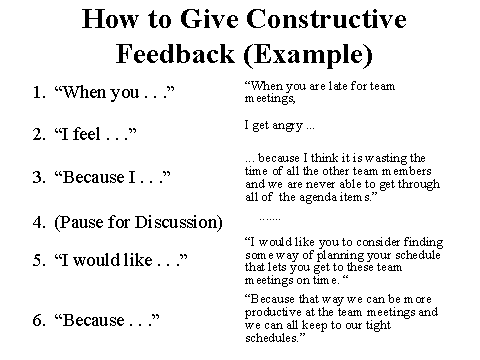
Giving feedback can be tricky. No one wants to be the bearer of bad news, but done right, it's a powerful tool. A helpful technique is the "feedback sandwich":
Positive Point:
Start with something positive. Acknowledge their strengths and efforts. This sets a positive tone and makes the person more receptive to what you're about to say. For example: "I really appreciate your dedication to this project, especially your creativity in the initial brainstorming sessions."
Constructive Criticism:
Now, deliver your constructive criticism. Be specific and focus on observable behaviors. Avoid generalizations or vague statements. Instead of saying "You're not a good team player," try: "During the last meeting, I noticed you didn't contribute to the discussion after the initial brainstorming, and that made it harder to make decisions as a team." Always offer suggestions on how to improve. For example, "Perhaps next time you could actively share your thoughts by making notes and voicing your perspectives earlier on?"
Positive Ending:
End on a positive note. Reiterate your confidence in their ability to improve, and offer your support. For example: "I know you're capable of making significant progress, and I’m happy to help you in any way I can. Let's schedule a follow-up to discuss how things are going."
Receiving Constructive Feedback: Embrace the Opportunity
Receiving feedback can be uncomfortable, but it's crucial for growth. Remember, the person giving you feedback is likely trying to help you. Here are some tips for handling it gracefully:
- Listen actively: Don't interrupt. Focus on understanding their perspective.
- Ask clarifying questions: If something is unclear, ask for more details. For example: "Can you give me a specific example of what you mean?"
- Don't get defensive: Even if you disagree with the feedback, avoid becoming defensive. Try to understand their point of view.
- Thank them: Show your appreciation for their time and effort in providing feedback. Even if the feedback is hard to hear, acknowledging their effort is crucial for maintaining a positive relationship.
- Reflect on the feedback: Take some time to consider the feedback and identify areas for improvement. Don't dismiss it immediately.
- Develop an action plan: Based on the feedback received, create a plan of action to address the areas that need improvement. This shows the other person you're truly invested in your development.
Making Feedback a Regular Practice
The best way to improve at giving and receiving feedback is to make it a regular habit. Incorporate it into your workflows, team meetings, and personal relationships. Consider these strategies:
- Schedule regular check-ins: Set aside time to discuss progress and receive feedback.
- Create a safe space for feedback: Foster an environment where people feel comfortable sharing their thoughts and opinions without fear of judgment.
- Use different methods: Experiment with various feedback methods, such as written reviews, informal conversations, 360-degree feedback, or peer reviews.
- Be patient and persistent: It takes time and practice to master the art of giving and receiving feedback. Don't get discouraged if it doesn't feel natural at first.
Remember the "Why"
At the heart of constructive feedback is a shared desire for growth and improvement. Remind yourself (and the person you're giving feedback to) of this common goal. It’s not about blame or criticism; it's about working together to achieve something better.
Commonly Asked Questions
Q: What if the feedback is overly critical or unfair?
A: This is tricky. Try to understand the person's perspective, but if the feedback is consistently negative and unhelpful, you might need to address it directly. Explain that you appreciate their feedback but find some points overly harsh or not constructive. Focus on how the feedback makes you feel and what you need to better process it.
Q: How do I deal with emotional reactions when receiving feedback?
A: It's perfectly normal to have emotional reactions to feedback, especially if it touches on sensitive areas. Take a moment to process your emotions before responding. You might need to take a break and come back to the conversation later. It’s okay to say, “I need a few minutes to process this before I respond.â€
Q: How can I make sure my feedback is specific and actionable?
A: Use the "STAR" method (Situation, Task, Action, Result). Describe the situation, the task at hand, the action taken, and the result. This provides a concrete example that makes your feedback clear and understandable.
Q: What if I'm afraid to give negative feedback?
A: It’s understandable to feel uncomfortable giving negative feedback. Focus on the positive impact your feedback can have â€" it helps the other person improve and strengthens your relationship in the long run. Remember the feedback sandwich! Start positive, deliver the feedback constructively, and end positively. Practice makes perfect!
By embracing constructive feedback as a tool for growth, both in giving and receiving, you’ll open doors to stronger relationships, enhanced skills, and a more fulfilling life.
0 comments:
Post a Comment
Note: Only a member of this blog may post a comment.